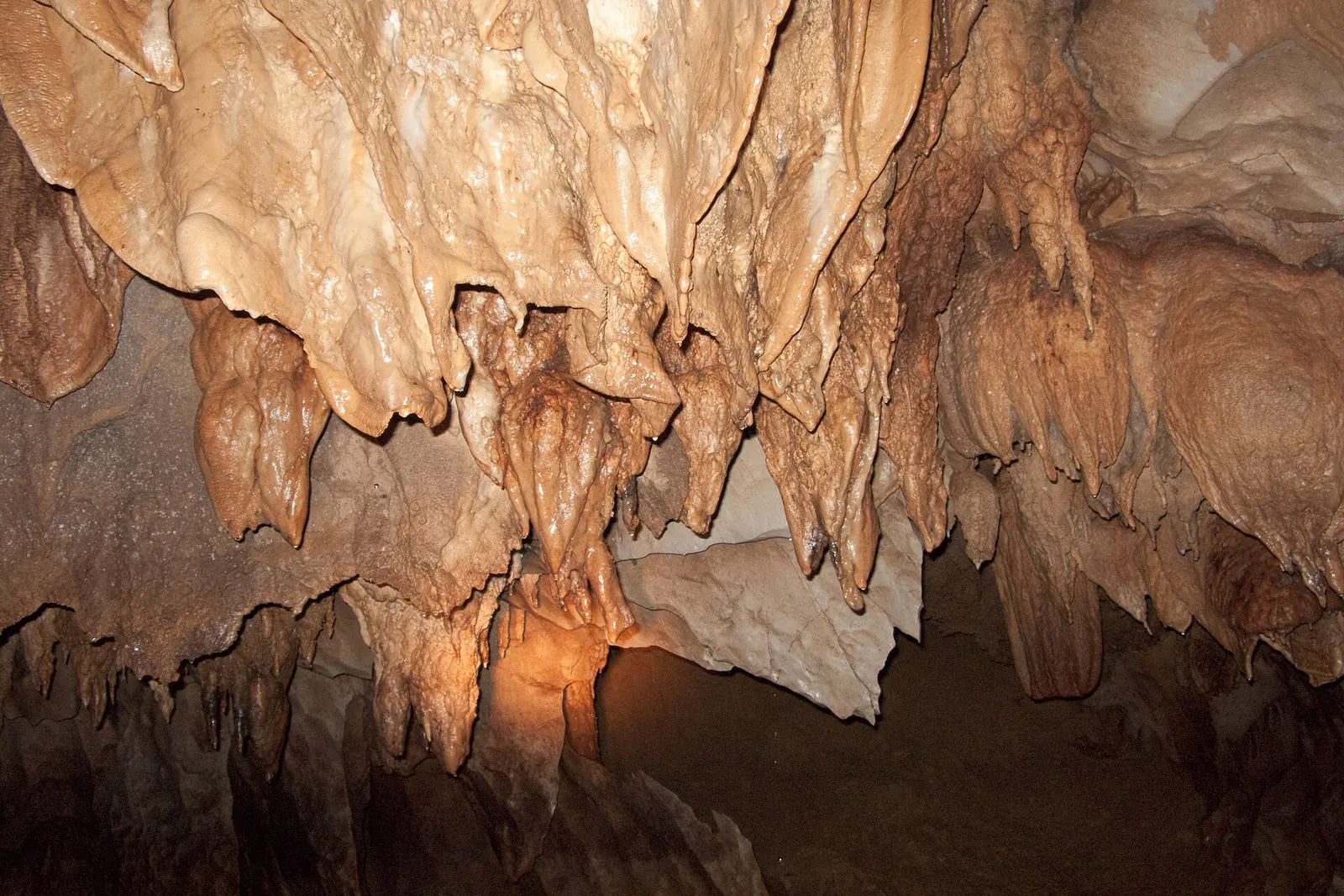

Stalactites and stalagmites
On the boat you pass limestone formations, stalactites and stalagmites.
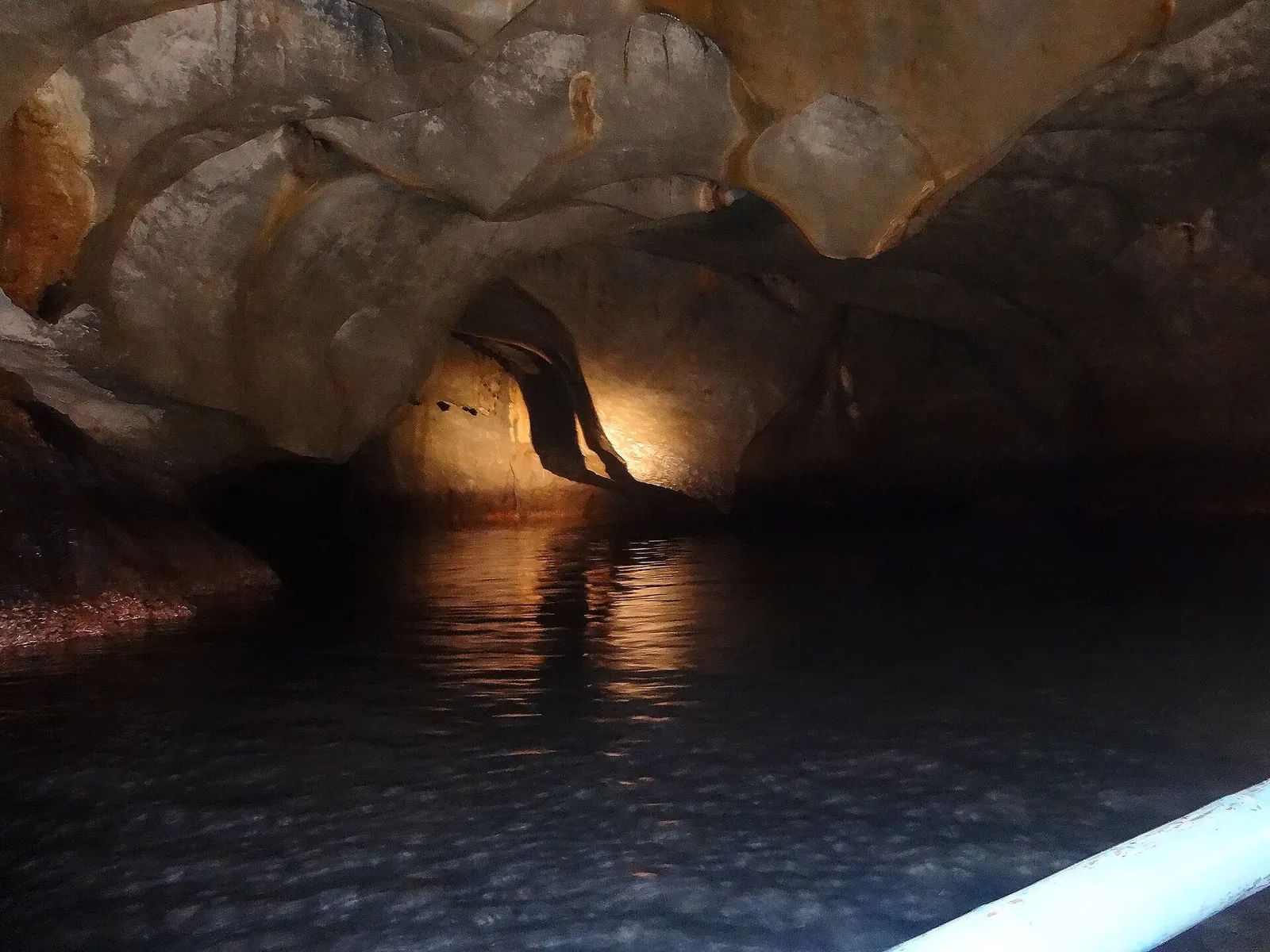
A paddle boat takes you 4.3 km (2.7 mi) into the Underground River cave in about an hour, past limestone formations, stalactites and stalagmites, in a cave where thousands of bats and swiftlets live. A boatman paddles and guides you.
The cave in numbers On the boat you pass limestone formations, stalactites and stalagmites.
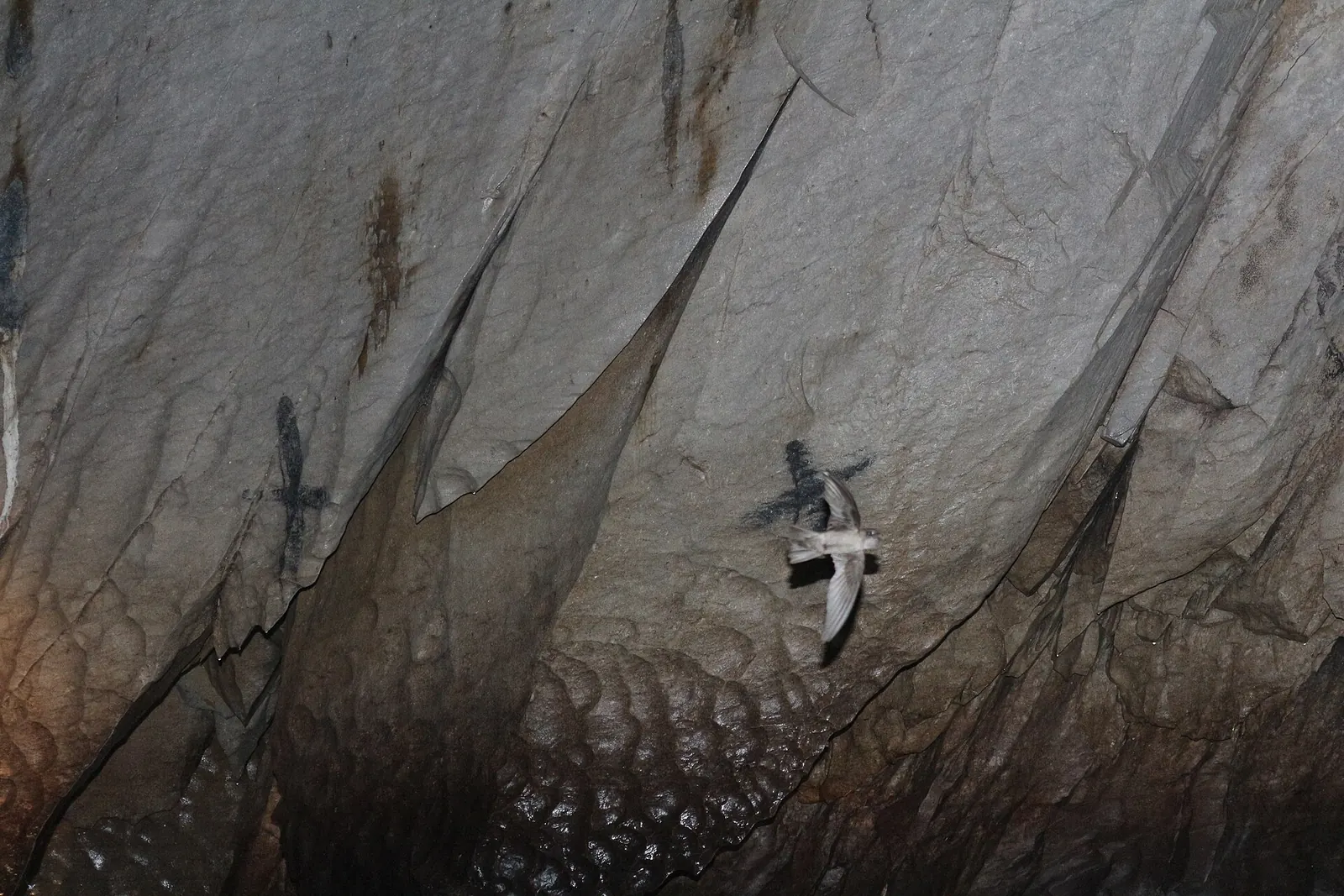
Thousands of bats and swiftlets live in the cave. Cave tours run from 8:00 AM to 4:00 PM, so boats stay out of the way of the bats and swiftlets as they leave and come back to the cave.
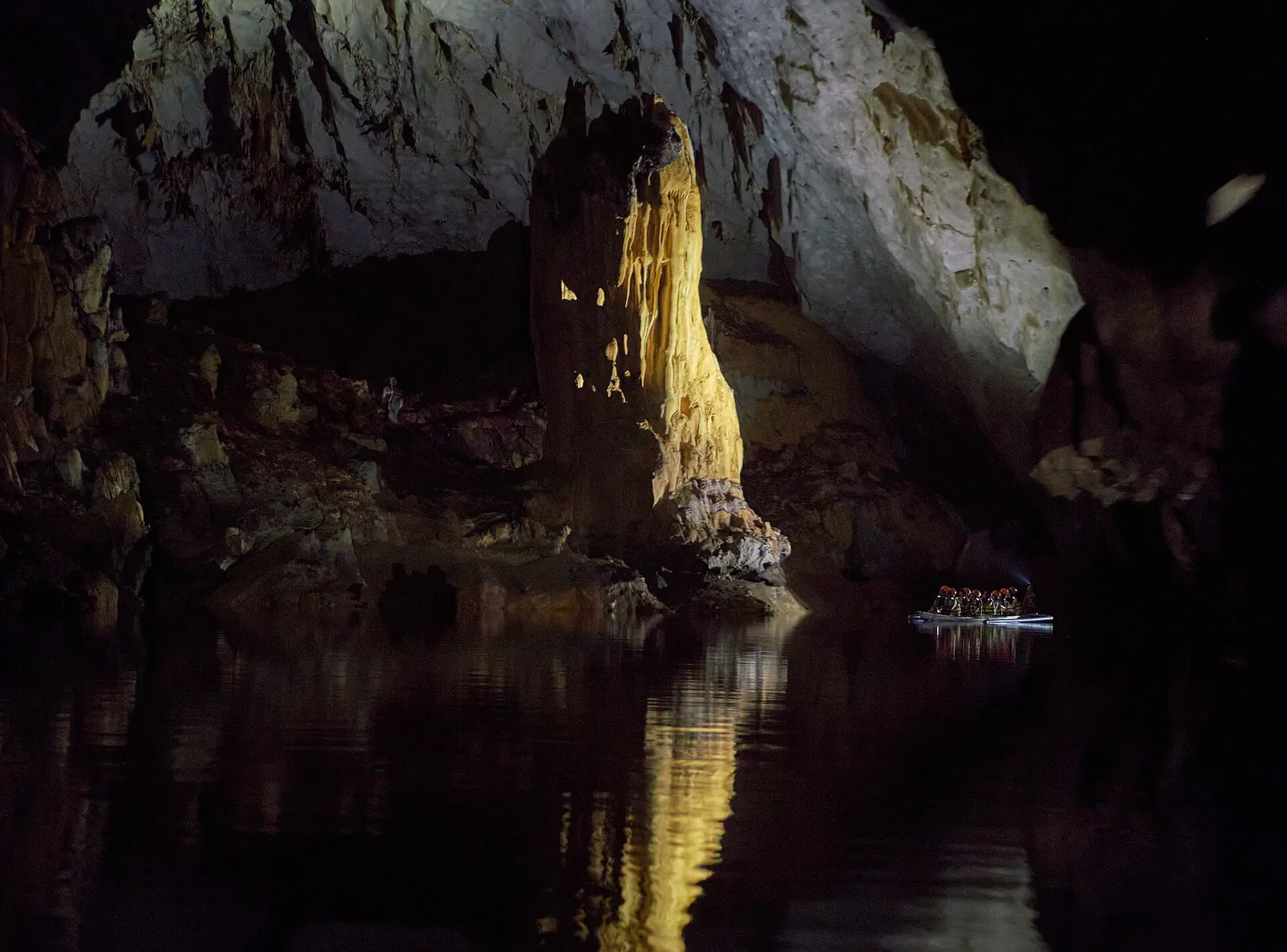
Inside the cave a trained boatman paddles the boat and guides the tour.
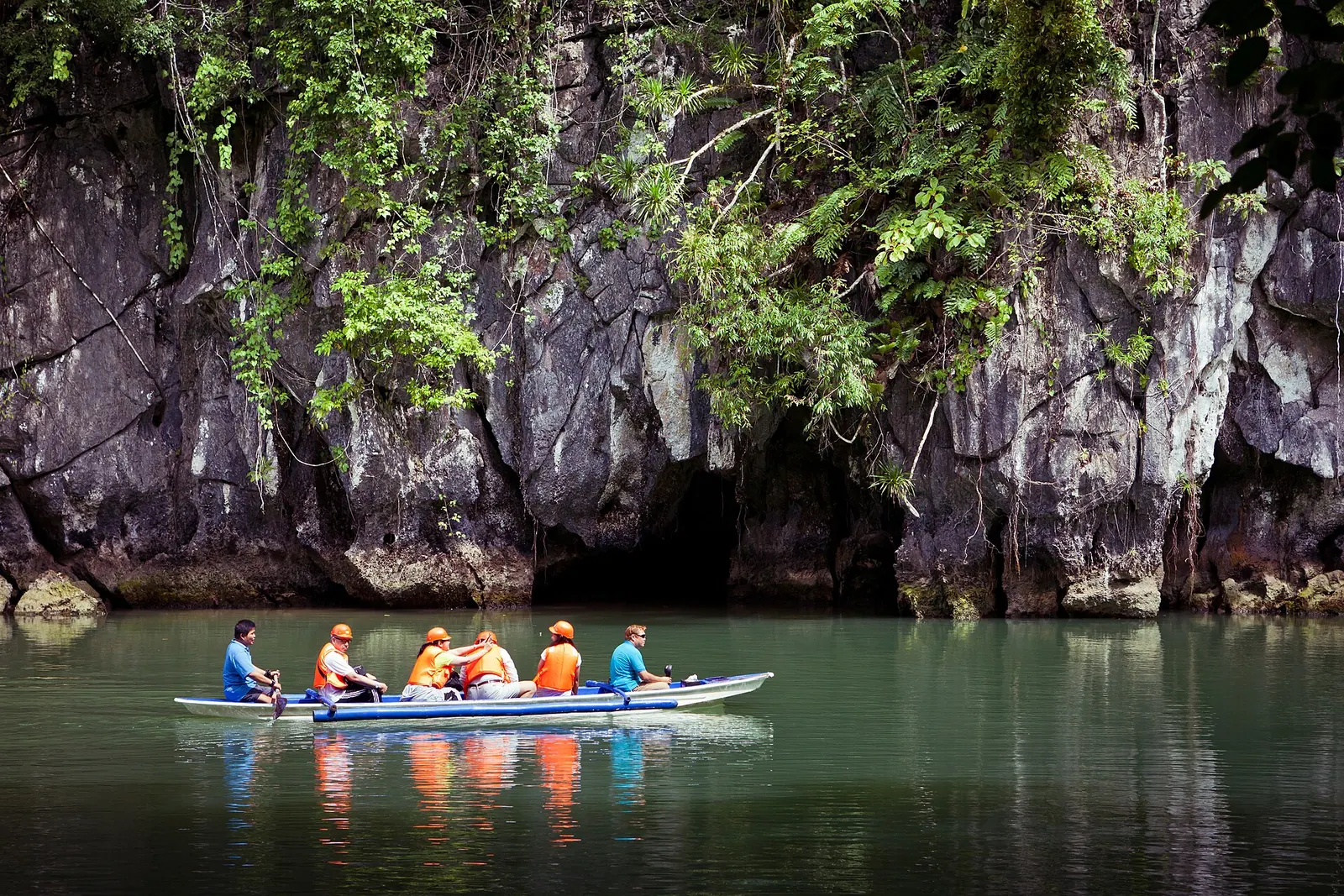
The river flows out of the cave straight into the sea. The lower half of the river is brackish and rises and falls with the tide.
See it yourself
Travellers report that tour agencies in Puerto Princesa run day trips by minivan that include the river tour and a buffet lunch at a beach resort.
Wonder of nature
The park describes it as the longest navigable underground river in the world. It was thought to be the world's longest underground river until a longer one was found in Mexico's Yucatán Peninsula in 2007.
The park became a UNESCO World Heritage Site on December 4, 1999. The World Heritage Site covers about 22,202 hectares around the underground river. The park became a Ramsar wetland site in 2012.
The underground river was named one of the New 7 Wonders of Nature on November 11, 2011. The other six New 7 Wonders of Nature are the Amazon Rainforest, Halong Bay, Iguazu Falls, Jeju Island, Komodo Island and Table Mountain.
Cave life
Thousands of bats and swiftlets live in the cave. Cave life includes large megalomorph spiders and tailless whip scorpions.
At least 11 minerals have been found in the cave, along with crystal and egg-shaped formations. A fossil of a sirenian, a relative of the sea cow, about 20 million years old, was found in the cave.
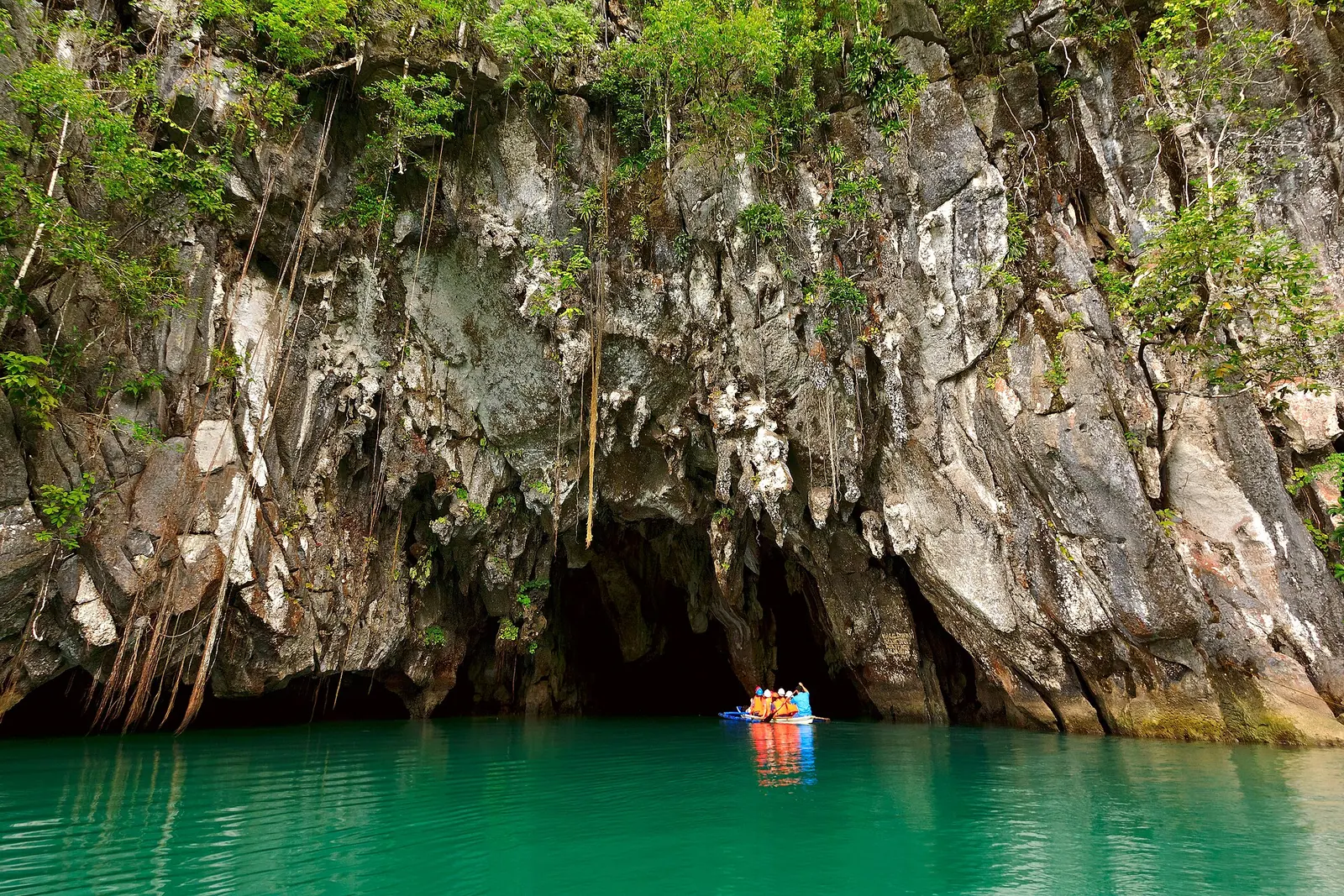
The river starts on Mount Bloomfield, waters rice paddies, then disappears under Mount St. Paul and becomes the underground river.
The river
The lower half of the river is brackish and rises and falls with the tide. Seawater mixes with the river up to about 6 km (3.7 mi) inside the cave.
The cave system the river runs through is at least 32 km (20 mi) long. In 2010 researchers found that the river has a second level, with small waterfalls inside the cave. The same team found a cave dome 300 m (980 ft) above the river.
Some chambers in the cave are up to 120 m wide and 60 m high.
Mount St. Paul
Mount St. Paul, the limestone mountain above the cave, is 1,028 m high. The limestone of the St. Paul range is about 16 to 20 million years old. The St. Paul limestone range runs about 11 km and is 3 to 5 km wide.
The highest peak in the park is Cleopatra's Needle, about 1,500 m. The park sits in the Saint Paul Mountain Range on the west coast of Palawan.


